Technology·
Android Auto Gets Major Design, Maps, Gemini Overhaul
Google is rolling out what it calls the biggest Android Auto update in years. The refresh brings a Material 3 Expressive design, edge-to-edge Google Maps, and integrates the Gemini AI assistant. Passengers can also look forward to HD video streaming while parked.
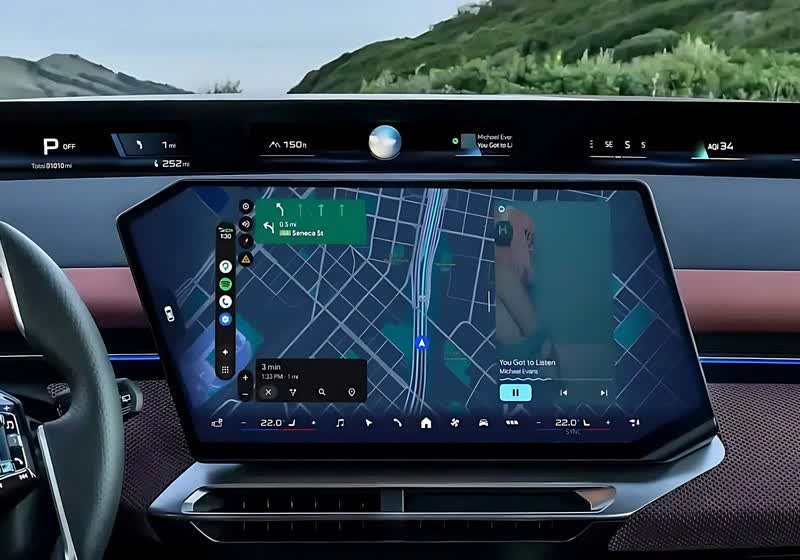
Drivers using Android Auto are about to see a much prettier, smarter dashboard. Google is pushing out a significant update to its in-car infotainment system, dubbed the biggest overhaul in years. This isn't just a lick of paint; it’s a comprehensive refresh that brings a cohesive Material 3 Expressive design, expands Google Maps to fill the entire screen, and integrates the conversational power of Gemini.
The update, which started rolling out around May 13, 2026, signals Google's continued commitment to automotive software, aiming to make the driving experience smoother and more integrated with its broader ecosystem. For years, Android Auto has been a serviceable, if sometimes visually uninspired, way to bring phone features into the car. This new version aims to change that perception, offering a more modern and intuitive interface that aligns with Google's latest design principles seen across its other products.
A Fresh Coat of Paint, Inside and Out
The most immediate change users will notice is the Material 3 Expressive design. This isn't just about aesthetics; it's about making the interface more user-friendly and visually appealing. We're talking expressive typography, smoother animations, and a wider range of vibrant wallpapers that can adapt to your car's interior. The quick settings panel has been redesigned, too, making it easier to access common functions like Wi-Fi, Bluetooth, and Do Not Disturb without digging through menus. It's Google's effort to bring a consistent, high-quality user experience from your phone screen to your car's display, reducing the cognitive load on drivers.
Beyond the fresh look, key functionality gets a boost. Google Maps, a cornerstone of any in-car system, now stretches edge-to-edge across the entire display. This move dramatically improves navigation clarity, giving drivers a much wider field of view for their routes and surroundings. No more awkwardly sized map windows; the display is finally used to its full potential. This might seem like a small detail, but in a world where every pixel counts for driver focus, it makes a real difference in how information is presented and consumed. It's about reducing clutter and emphasizing what's most important: the road ahead.
More Than Just Pretty Faces: AI and Entertainment
Perhaps the most significant functional upgrade comes with the integration of Gemini, Google's advanced AI assistant. Android Auto has always had voice control, but Gemini promises a more conversational and context-aware experience. Imagine asking for directions, then immediately inquiring about nearby gas stations, or even dictating a quick message, all with a more natural dialogue. This deeper AI integration aims to reduce distraction by allowing drivers to keep their hands on the wheel and eyes on the road, relying on more intuitive voice commands.
For passengers, especially on longer journeys, the update brings HD video streaming capabilities. While strictly limited to when the car is parked – a crucial safety measure – this feature opens up new entertainment options. Think about waiting to pick up kids from school or charging an electric vehicle; passengers can now stream high-definition content directly to the car's screen, making downtime more enjoyable. It’s a nod to the evolving role of the car, not just as a mode of transport, but as a connected hub that can offer more than just radio tunes.
Why It Matters
This Android Auto update isn't just a cosmetic refresh; it's a strategic move by Google to solidify its position in the rapidly evolving automotive technology space. By aligning Android Auto with the broader Material 3 design language and integrating its cutting-edge AI in Gemini, Google is making its in-car experience more competitive with rivals like Apple CarPlay and increasingly sophisticated native infotainment systems from car manufacturers. For users, it means a more intuitive, safer, and enjoyable driving experience, with clearer navigation and better voice control. As cars become more like computers on wheels, a well-designed, intelligent interface like this becomes less of a luxury and more of a necessity for seamless connectivity and an improved journey for everyone inside the vehicle.
- android auto
- google maps
- gemini
- material design
- infotainment
- automotive
Sources
Related
Two Critical Kernel Bugs Threaten Linux Systems
Two new "very critical" vulnerabilities, CVE-2026-64564 and CVE-2026-64561, have been reported in the Linux kernel, affecting multiple versions up to 7.2-rc4. These bugs, one in SCTP and another in KVM, present significant risks to systems running the widely used operating system.
Aug 4, 2026
Bouncy Castle Bug Poses DoS Risk for Java Systems
A recently disclosed vulnerability, CVE-2026-58059, affects the widely used Bouncy Castle cryptographic library for Java. The bug, involving quadratic-time processing of X.500 distinguished names, could lead to denial-of-service attacks. Developers are urged to update to patched versions immediately.
Aug 3, 2026
Netty DNS Poisoning: A Recurring Threat to Network Apps
A new vulnerability, CVE-2026-45674, has surfaced in Netty, a widely used network application framework. The flaw allows for DNS cache poisoning due to improper validation of CNAME records, potentially redirecting users to malicious sites. Developers should update to versions 4.1.135.Final or 4.2.15.Final immediately.
Jun 12, 2026