Technology·
Black Noir's Surprising Exit: A Look at The Boys' Narrative Play
Showrunner Eric Kripke has confirmed a significant twist for The Boys' final season: the original Black Noir is dead, replaced by a new character under the familiar mask. This move isn't just a plot device; it's a calculated decision with implications for how we perceive character, narrative design, and the corporate branding of fictional heroes in streaming media.
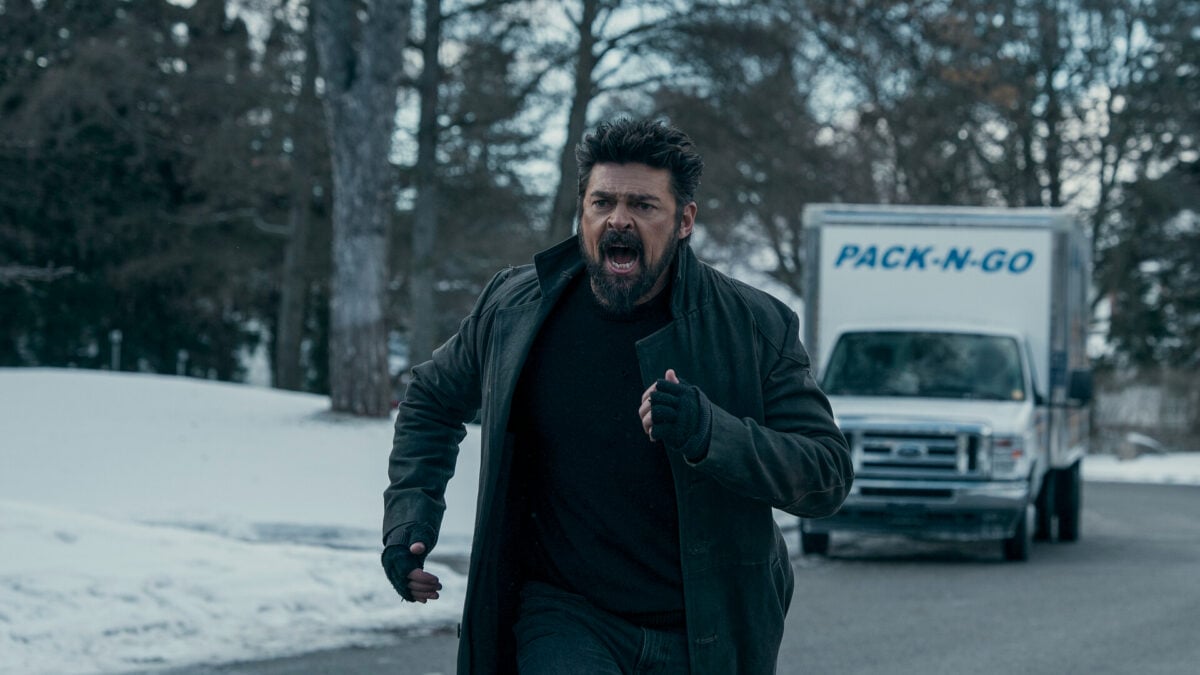
Fans of Prime Video's The Boys are used to shockers, but showrunner Eric Kripke just pulled one that reframes how we think about characters and continuity. He's confirmed that the original Black Noir – Vought's silent, mysterious, and ultimately tragic supe – is truly gone, killed off, and the character now sporting the familiar costume is an entirely new person.
This isn't just a minor plot point; it's a bold narrative choice. Kripke told TVLine directly: "Black Noir is dead." The actor, Nathan Mitchell, who previously portrayed the original Black Noir, will continue in the role, but as a different character. Think of it less as a recast and more as a brand hand-off. Vought, the corporate overlords of these 'heroes,' isn't about to let a good brand identity go to waste, even if the individual behind the mask is no longer breathing. It's a move that forces us to question the very nature of character identity in a serialized, corporate-driven franchise.
The Man Behind (Or Not Behind) the Mask
For four seasons, Black Noir was an enigma. He was the quiet powerhouse, Homelander's loyal enforcer, and a living shadow. Then, in a brilliant narrative turn, the show peeled back that mystery, revealing a deeply traumatized individual who carried the scars of Soldier Boy's abuse. He wasn't just a silent killer; he was a broken man, prone to hallucinations, a poignant symbol of Vought's destructive impact on its own creations. His eventual death, at Homelander's hands, felt like a tragic but fitting end to that specific character arc.
Now, Kripke is making it clear that that character is truly history. The new Black Noir, according to Kripke, is intended to be a return to the comic book's portrayal: a "scary, silent killer." This suggests a deliberate shift away from the nuanced, emotionally complex character we came to know. It's a strategic reset, perhaps aiming for a more straightforward threat or a blank slate for new story directions. But it also raises questions about the value of character development if a character's essence can be so easily discarded and replaced by a new, more generic model, much like an outdated product line.
Narrative Engineering and Audience Expectations
This isn't the first time a major fictional universe has played with character identity, but The Boys does it with a meta-commentary that's rarely seen. The show itself is a sharp critique of corporate power, branding, and the commodification of heroism. So, a corporation like Vought simply swapping out the person behind a popular superhero brand feels perfectly in line with its satirical bent. It’s the ultimate expression of corporate indifference: the brand is more important than the individual who embodies it.
For those of us interested in the mechanics of storytelling, this is a fascinating example of narrative engineering. Kripke and his team are essentially performing a 'character hot-swap' in plain sight. They're betting that the visual iconography of Black Noir is strong enough to carry a new personality, and that the audience will accept the premise. It challenges the traditional understanding of character as an immutable entity, suggesting instead that in certain contexts, particularly those influenced by corporate IP, a 'character' can be a role, a costume, a brand, rather than a singular person. It's a high-wire act, balancing fan expectations for continuity with the desire to introduce fresh story elements.
Why it matters
This move by The Boys creative team offers a potent case study for anyone involved in building and managing complex systems, be they fictional universes or real-world products. It highlights the tension between creative vision, brand identity, and audience engagement. How much can you change a core component before the system breaks? For professionals in media, marketing, or even product design, it's a lesson in the lifecycle of an 'asset' – whether a character, a feature, or a brand – and the calculated risks involved in iterating, or even outright replacing, established elements to keep an audience invested in an ever-evolving narrative. It shows us that even in fiction, the brand often outlives the individual. The implications for how we consume and create serialized content are significant, proving that sometimes, the mask is indeed more powerful than the person wearing it.
- the boys
- streaming
- prime video
- eric kripke
- narrative design
- pop culture
Sources
- Let’s Talk About That Big 'The Boys' Spoiler · Jen Lennon
Related
Two Critical Kernel Bugs Threaten Linux Systems
Two new "very critical" vulnerabilities, CVE-2026-64564 and CVE-2026-64561, have been reported in the Linux kernel, affecting multiple versions up to 7.2-rc4. These bugs, one in SCTP and another in KVM, present significant risks to systems running the widely used operating system.
Aug 4, 2026
Bouncy Castle Bug Poses DoS Risk for Java Systems
A recently disclosed vulnerability, CVE-2026-58059, affects the widely used Bouncy Castle cryptographic library for Java. The bug, involving quadratic-time processing of X.500 distinguished names, could lead to denial-of-service attacks. Developers are urged to update to patched versions immediately.
Aug 3, 2026
Netty DNS Poisoning: A Recurring Threat to Network Apps
A new vulnerability, CVE-2026-45674, has surfaced in Netty, a widely used network application framework. The flaw allows for DNS cache poisoning due to improper validation of CNAME records, potentially redirecting users to malicious sites. Developers should update to versions 4.1.135.Final or 4.2.15.Final immediately.
Jun 12, 2026