Technology·
eBay Rejects GameStop's Implausible $55 Billion Bid
eBay has outright rejected an astonishing $55 billion takeover bid from GameStop, deeming the offer neither credible nor attractive. The e-commerce giant cited significant concerns regarding GameStop's ability to finance such an enormous acquisition, casting a shadow of doubt over the entire proposal.
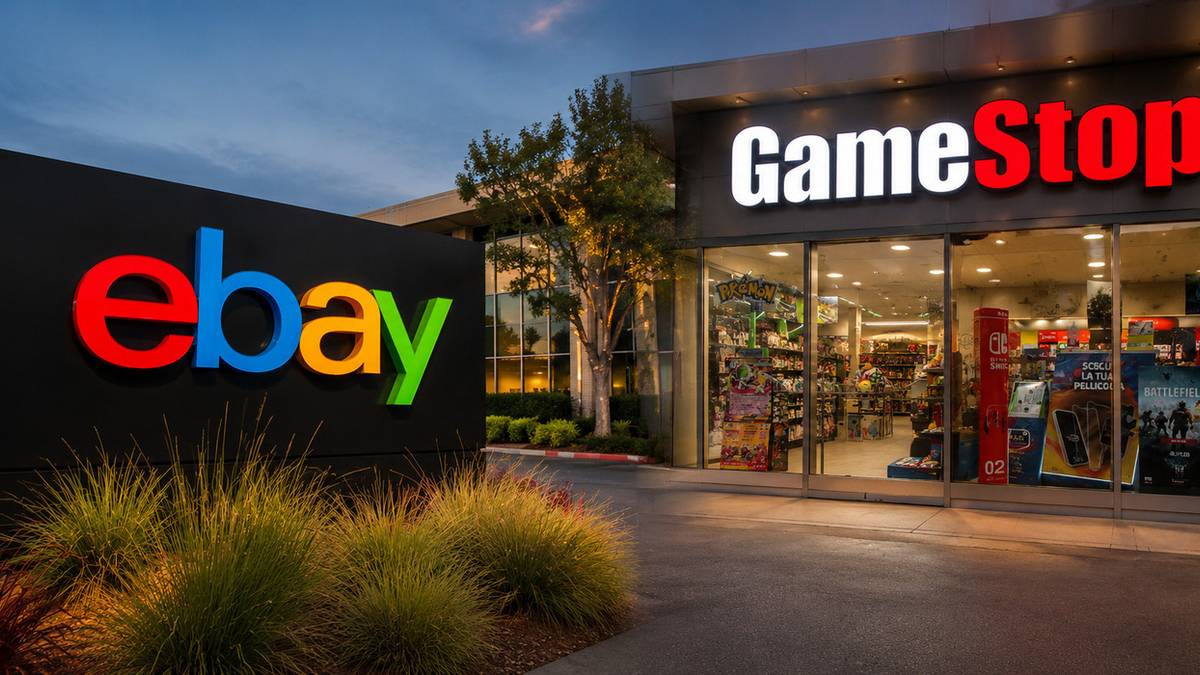
It appears the meme stock phenomenon, while powerful, has its limits when facing the realities of corporate finance. This week, online marketplace giant eBay flatly turned down a colossal $55 billion takeover offer from video game retailer GameStop, calling the proposal neither credible nor attractive. The core issue, according to eBay, wasn't just the price tag, but the deep questions surrounding how GameStop, a company with a market capitalization considerably less than the bid itself, ever planned to pay for it.
This isn't a minor skirmish; it's a major pronouncement that even in an era of speculative market surges, a deal still needs a foundation in financial logic. While the exact details of GameStop's financing strategy for the bid remain hazy – the source merely states that "questions over financing undermined the offer" – the sheer scale of the proposed transaction against GameStop's current financial standing made it a non-starter for eBay's board. For context, GameStop's market cap has fluctuated wildly but was significantly lower than $55 billion at the time of the bid, making the financing a clear hurdle.
A Bold, Perhaps Reckless, Play
GameStop's journey has been anything but conventional since its unexpected rise as a retail investor darling in early 2021. Buoyed by social media fervor and a short squeeze that sent its stock price soaring, the company found itself with an unprecedented level of attention and, for a time, a significantly inflated valuation. This notoriety, however, hasn't fully translated into a clear, profitable long-term business strategy beyond attempts to pivot into digital collectibles and other ventures. A $55 billion bid for an established e-commerce player like eBay suggests a dramatic acceleration of that pivot – or perhaps a Hail Mary pass.
eBay, for its part, remains a formidable player in online commerce, albeit one facing intense competition from Amazon and more specialized marketplaces. The company reported roughly $10.1 billion in revenue for 2023, showcasing a stable, if not explosive, business. While its growth has moderated over the years, its established infrastructure, global reach, and robust user base still make it a valuable asset. The idea that GameStop could simply absorb such a behemoth, particularly without clear financing, must have struck eBay's leadership as fantastical rather than strategic. We've seen plenty of consolidation in tech, but it usually comes with a clear financial runway.
The Reality Check for Meme Stocks
This rejection serves as a stark reminder that market sentiment, no matter how strong, doesn't trump fundamental financial principles in large-scale M&A. While GameStop has successfully capitalized on its meme stock status to raise capital in the past, a $55 billion acquisition is an entirely different beast. It requires serious debt, equity issuance on a massive scale, or a combination that would likely dilute existing shareholders significantly, assuming lenders or investors would even entertain such a risky proposition given GameStop's volatile stock history and its relatively small operational footprint compared to eBay.
Historically, mergers and acquisitions of this magnitude are meticulously planned, often involving months of due diligence and commitments from major financial institutions. For eBay to dismiss the bid so quickly and unequivocally points to a fundamental lack of seriousness or viability in GameStop's approach. It suggests the offer was less about a calculated business expansion and more about leveraging its newfound market visibility in an unconventional, and ultimately unsuccessful, way.
Why it matters
This episode is more than just a failed deal; it's a bellwether for the broader tech and financial markets. It underscores the ongoing tension between market speculation and actual business fundamentals, particularly in the wake of the meme stock phenomenon. For GameStop, it's a significant reality check, highlighting the challenges of translating market hype into tangible, large-scale corporate growth. For eBay, it's a reaffirmation of its value and a clear signal that it won't entertain bids lacking financial backbone. We'll be watching to see if this rejection prompts a more grounded strategic direction from GameStop or if it simply spurs more unconventional plays in the future.
- gamestop
- ebay
- acquisition
- e-commerce
- meme stocks
- corporate finance
Sources
- eBay Turns Down GameStop's $55 Billion Takeover Bid · Uchenna Onyia
Related
Two Critical Kernel Bugs Threaten Linux Systems
Two new "very critical" vulnerabilities, CVE-2026-64564 and CVE-2026-64561, have been reported in the Linux kernel, affecting multiple versions up to 7.2-rc4. These bugs, one in SCTP and another in KVM, present significant risks to systems running the widely used operating system.
Aug 4, 2026
Bouncy Castle Bug Poses DoS Risk for Java Systems
A recently disclosed vulnerability, CVE-2026-58059, affects the widely used Bouncy Castle cryptographic library for Java. The bug, involving quadratic-time processing of X.500 distinguished names, could lead to denial-of-service attacks. Developers are urged to update to patched versions immediately.
Aug 3, 2026
Netty DNS Poisoning: A Recurring Threat to Network Apps
A new vulnerability, CVE-2026-45674, has surfaced in Netty, a widely used network application framework. The flaw allows for DNS cache poisoning due to improper validation of CNAME records, potentially redirecting users to malicious sites. Developers should update to versions 4.1.135.Final or 4.2.15.Final immediately.
Jun 12, 2026