Technology·
NASA's Artemis III: A Dress Rehearsal for Lunar Docking
NASA's Artemis III mission will serve as a crucial full-scale rehearsal in low Earth orbit, testing the Orion spacecraft's docking procedures. This vital test aims to validate operations with commercial lunar landers and refine protocols for subsequent human missions to the Moon.
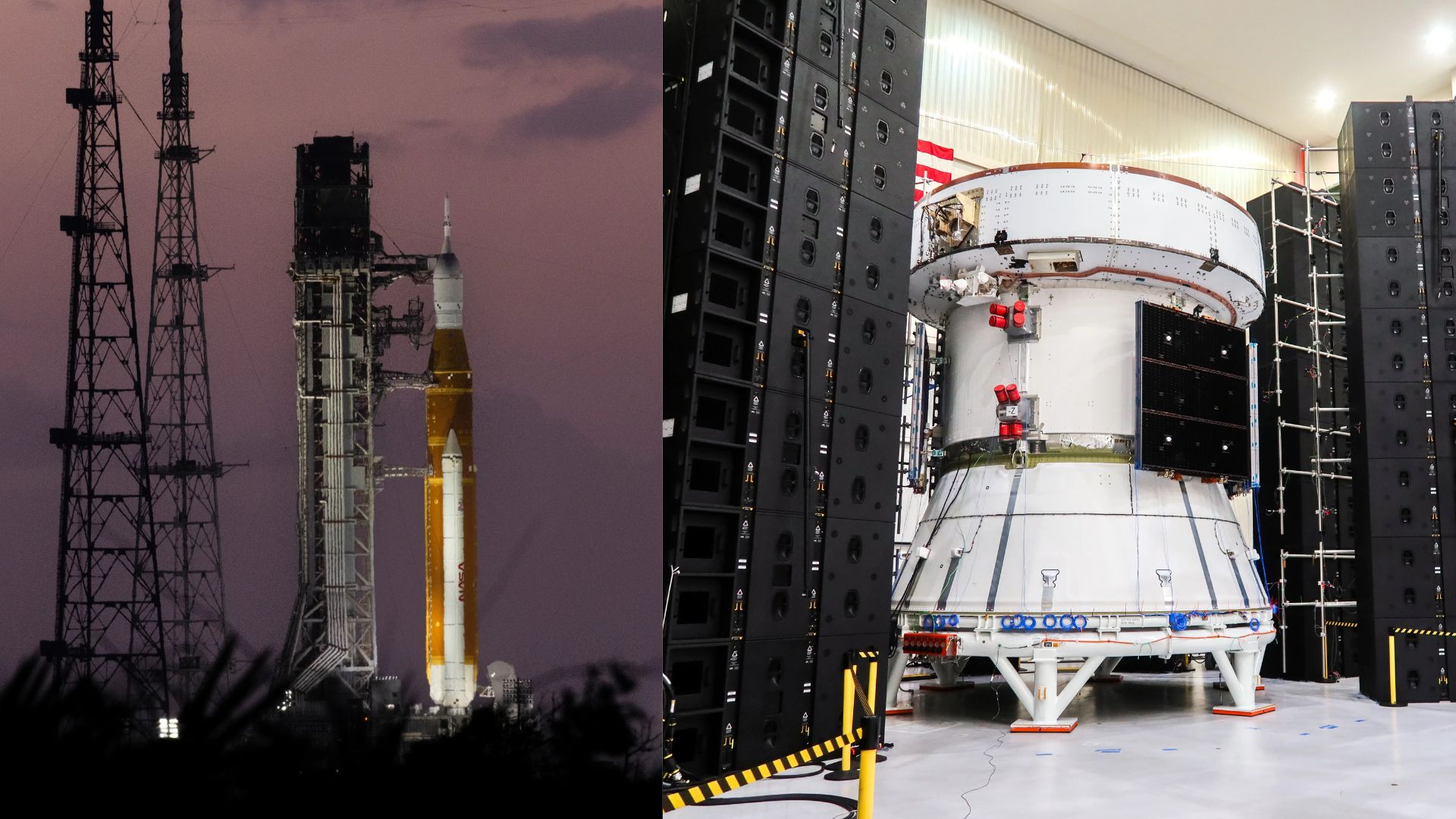
For years, the Artemis program has captivated us with the promise of returning humans to the Moon. But before we see astronauts touch down again, there’s a critical step that needs a dry run. NASA has confirmed that Artemis III, the mission initially slated to land astronauts on the lunar surface, will now include a full-scale orbital rehearsal in low Earth orbit (LEO).
This isn't just another test flight; it's a strategic move to de-risk one of the most complex phases of the mission: docking the Orion spacecraft with a commercial lunar lander. The plan is to simulate the precise maneuvers and procedures needed for future Moon missions, ensuring everything works as expected before attempting it millions of miles away. It’s a smart pivot that acknowledges the challenges of deep-space operations and the integration of commercial partners like SpaceX, which is developing the Starship Human Landing System (HLS).
The LEO Test: What It Entails
The specifics of the LEO rehearsal involve Orion, carrying its crew, rendezvous-ing and docking with a dummy or uncrewed version of the Starship HLS in orbit around Earth. This isn't a new concept for NASA; we’ve seen similar tests in the past, from Gemini capsules practicing with Agena target vehicles in the 1960s to the Space Shuttle's early rendezvous with the European EURECA platform. But this rehearsal is different. It’s about certifying a new generation of spacecraft – Orion, designed for deep space, and a commercial lander – for a rendezvous that will eventually happen far from Earth's protective embrace.
The test will validate everything from guidance, navigation, and control systems to the actual physical connection mechanisms. Crew procedures will be refined, and ground control will get invaluable practice managing such a complex dance. This is particularly important because Orion isn't just docking with any commercial lander; it's docking with Starship, a behemoth unlike any spacecraft humans have docked with before. Starship's sheer size and its unique design present fresh engineering and operational challenges that need to be thoroughly understood and mastered.
A History of Caution and Collaboration
NASA’s history is filled with examples of meticulous testing before critical missions. The Apollo program, for instance, had several uncrewed and crewed Earth-orbit tests, including Apollo 9, which famously practiced lunar module docking in LEO. These rehearsals were instrumental in identifying and fixing issues long before the Apollo 11 lunar landing. This Artemis III LEO test follows in that tradition, adding a layer of prudence to an ambitious endeavor.
Integrating commercial partners into crewed spaceflight isn't new, either. SpaceX and Boeing now regularly ferry astronauts to the International Space Station. However, integrating a commercial lander for a lunar mission, especially one as integral and complex as Starship HLS, is a significant leap. This LEO rehearsal is a practical manifestation of NASA's commitment to commercial partnerships, demonstrating trust while also exercising due diligence. It suggests a pragmatic approach to mission planning, prioritizing safety and success over rigid adherence to initial timelines.
Why It Matters
This LEO rehearsal for Artemis III isn't just about a single mission; it's a foundational step for the entire future of human deep-space exploration. By thoroughly vetting the Orion-lander docking procedure close to home, NASA significantly reduces the risks for the actual lunar landing mission and subsequent journeys to the Moon and eventually Mars. It also provides critical data for the development of future space infrastructure, like the Gateway lunar outpost. This move underscores a lesson learned repeatedly in spaceflight: testing, practice, and methodical preparation are not delays, but essential investments in success. For those of us watching the space industry, it's a clear signal that safety and operational rigor remain paramount, even as we push the boundaries further than ever before.
- artemis
- nasa
- orion
- spacex
- moon
- space exploration
Sources
Related
Two Critical Kernel Bugs Threaten Linux Systems
Two new "very critical" vulnerabilities, CVE-2026-64564 and CVE-2026-64561, have been reported in the Linux kernel, affecting multiple versions up to 7.2-rc4. These bugs, one in SCTP and another in KVM, present significant risks to systems running the widely used operating system.
Aug 4, 2026
Bouncy Castle Bug Poses DoS Risk for Java Systems
A recently disclosed vulnerability, CVE-2026-58059, affects the widely used Bouncy Castle cryptographic library for Java. The bug, involving quadratic-time processing of X.500 distinguished names, could lead to denial-of-service attacks. Developers are urged to update to patched versions immediately.
Aug 3, 2026
Netty DNS Poisoning: A Recurring Threat to Network Apps
A new vulnerability, CVE-2026-45674, has surfaced in Netty, a widely used network application framework. The flaw allows for DNS cache poisoning due to improper validation of CNAME records, potentially redirecting users to malicious sites. Developers should update to versions 4.1.135.Final or 4.2.15.Final immediately.
Jun 12, 2026