Technology·
Old Bombers' Star Navigators Could Defy Solar Storms
Modern GPS is vulnerable to powerful solar flares, threatening navigation worldwide. Surprisingly, vintage analog navigation systems from military aircraft, which rely on celestial mechanics instead of satellites, could offer a crucial backup. This highlights an unexpected resilience in old tech.
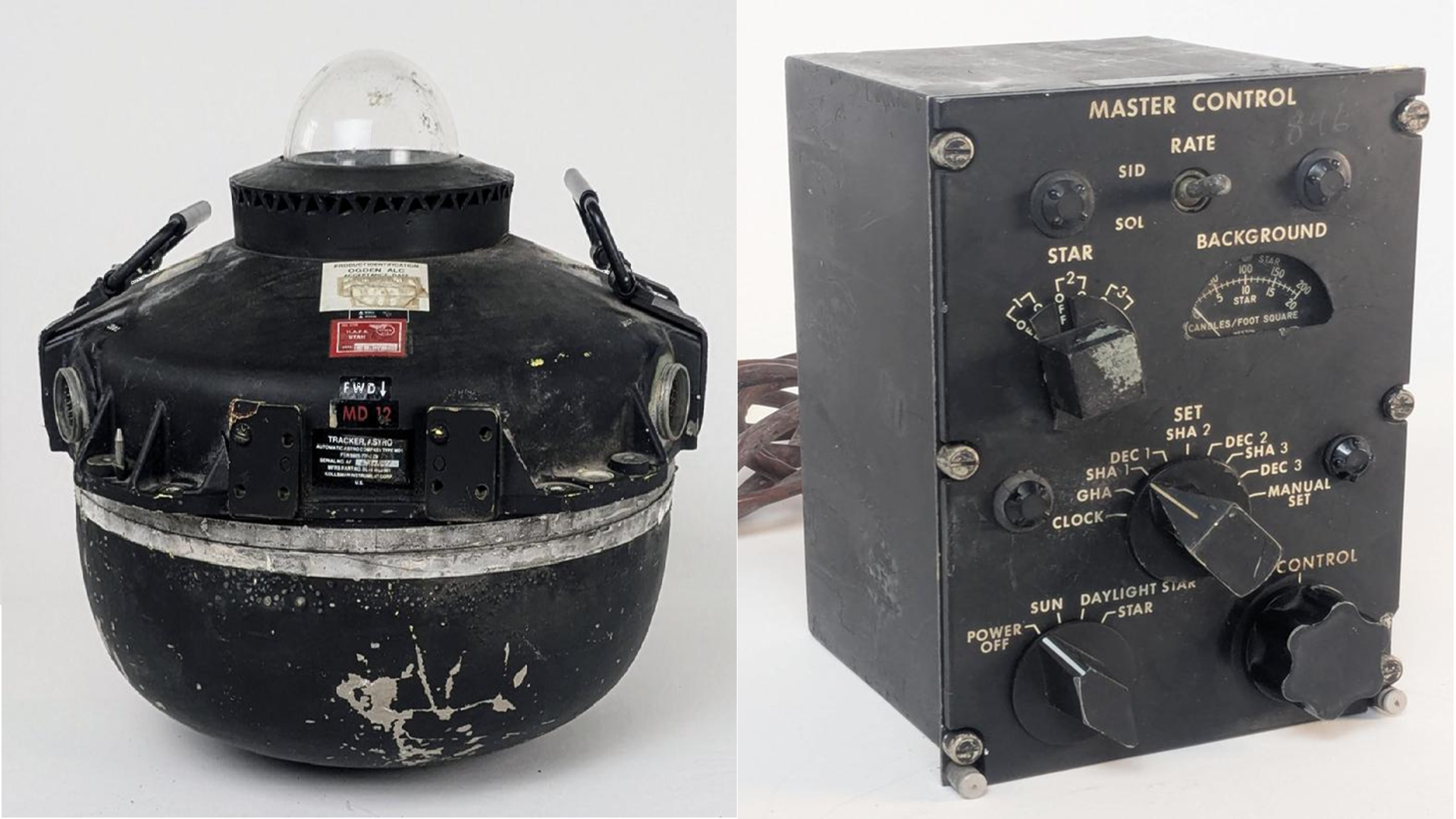
Imagine a world without GPS. No turn-by-turn directions, no precision timing for financial markets, no coordinated flights. It sounds like science fiction, but a severe space weather event, known as a Coronal Mass Ejection (CME), could make it a reality. These massive bursts of plasma and magnetic field from the Sun can unleash an electromagnetic pulse (EMP) powerful enough to scramble satellite signals, fry electronics, and plunge our hyper-connected world into chaos. It's a threat few consider, yet one that keeps some scientists and military strategists awake at night.
But what if salvation came from an unexpected quarter – from technology developed decades ago, before the first GPS satellite even left the launchpad? We’re talking about the kind of gear found in Cold War-era bombers, systems designed to guide aircraft across continents using nothing but the stars.
Star Power vs. Solar Fury
Our reliance on GPS is absolute. Every time you pull out your phone to find your way, or a commercial airliner navigates a precise route, or even when power grids synchronize their operations, GPS signals are at work. The system, comprising a constellation of satellites orbiting Earth, transmits faint radio signals that receivers interpret to pinpoint location and time. This intricate dance of digital communication is incredibly efficient and accurate, but it's also incredibly fragile. A major CME, like the Carrington Event of 1859 or the less severe but still disruptive 1989 Quebec power outage, could overwhelm these signals, rendering GPS useless for days, weeks, or even longer as systems fail or struggle to recover.
This is where the venerable, often forgotten, analog computer steps in. The US Air Force, for instance, once equipped its long-range bombers with sophisticated celestial navigation systems. These weren't digital in any modern sense; they were electromechanical marvels. Think of an advanced sextant combined with a precise clock and a mechanical computer that could calculate a position based on the altitude and azimuth of stars, the sun, or even the moon. Because these systems operate without relying on sensitive microchips or constant radio signals from space, they are inherently immune to the electromagnetic chaos that a solar storm would unleash. They collect light, measure angles, and perform calculations using gears, cams, and mirrors – a physical process unaffected by an EMP.
The Price of Robustness
Of course, there's a significant trade-off. Modern GPS offers unparalleled accuracy – often within a few meters – and instant, automatic updates. Celestial navigation, while robust, requires highly skilled navigators, clear skies (or at least knowledge of when and where to find stars), and a significant amount of manual input and calculation. It's slower, less precise, and far more labor-intensive. It's the difference between a self-driving car and a horse-drawn carriage: both get you there, but one offers a very different journey. After GPS became widely available, the need for these specialized navigators and their intricate equipment largely faded, replaced by automated, digital systems that were easier to train for and deploy.
However, the prospect of an extreme solar storm forces us to reconsider what we value in critical infrastructure. Do we prioritize convenience and precision above all else, or is there a place for robust, albeit old-fashioned, backup systems that can function when everything else fails? Reviving the knowledge and equipment for celestial navigation isn't a simple task, but the fact that such a low-tech solution exists and could provide a lifeline in a crisis is a powerful reminder. It speaks to the ingenuity of past engineers and the potential vulnerabilities of our present-day technological marvels.
Why it matters
This isn't just an interesting historical footnote; it's a stark reminder of our dependence on complex, interconnected digital systems and their points of failure. The potential resilience of analog celestial navigation in the face of a catastrophic solar storm highlights the need for diverse and redundant critical infrastructure. It suggests that sometimes, the simplest, most physical solutions are the ones that endure when everything else goes dark, prompting us to think about preparedness beyond the latest silicon chip.
- solar storm
- gps
- navigation
- vintage tech
- resilience
- aerospace
Sources
Related
Two Critical Kernel Bugs Threaten Linux Systems
Two new "very critical" vulnerabilities, CVE-2026-64564 and CVE-2026-64561, have been reported in the Linux kernel, affecting multiple versions up to 7.2-rc4. These bugs, one in SCTP and another in KVM, present significant risks to systems running the widely used operating system.
Aug 4, 2026
Bouncy Castle Bug Poses DoS Risk for Java Systems
A recently disclosed vulnerability, CVE-2026-58059, affects the widely used Bouncy Castle cryptographic library for Java. The bug, involving quadratic-time processing of X.500 distinguished names, could lead to denial-of-service attacks. Developers are urged to update to patched versions immediately.
Aug 3, 2026
Netty DNS Poisoning: A Recurring Threat to Network Apps
A new vulnerability, CVE-2026-45674, has surfaced in Netty, a widely used network application framework. The flaw allows for DNS cache poisoning due to improper validation of CNAME records, potentially redirecting users to malicious sites. Developers should update to versions 4.1.135.Final or 4.2.15.Final immediately.
Jun 12, 2026