Technology·
Ukraine's Trident Laser: A Cost-Effective Drone Defense?
Ukraine is reportedly developing a new laser weapon, Trident, capable of destroying drones and blinding surveillance systems up to three miles away. Its projected cost is a fraction of traditional Western air defense, posing a potential disruption to military spending and strategy. If successful, this could significantly alter the economics of modern warfare.
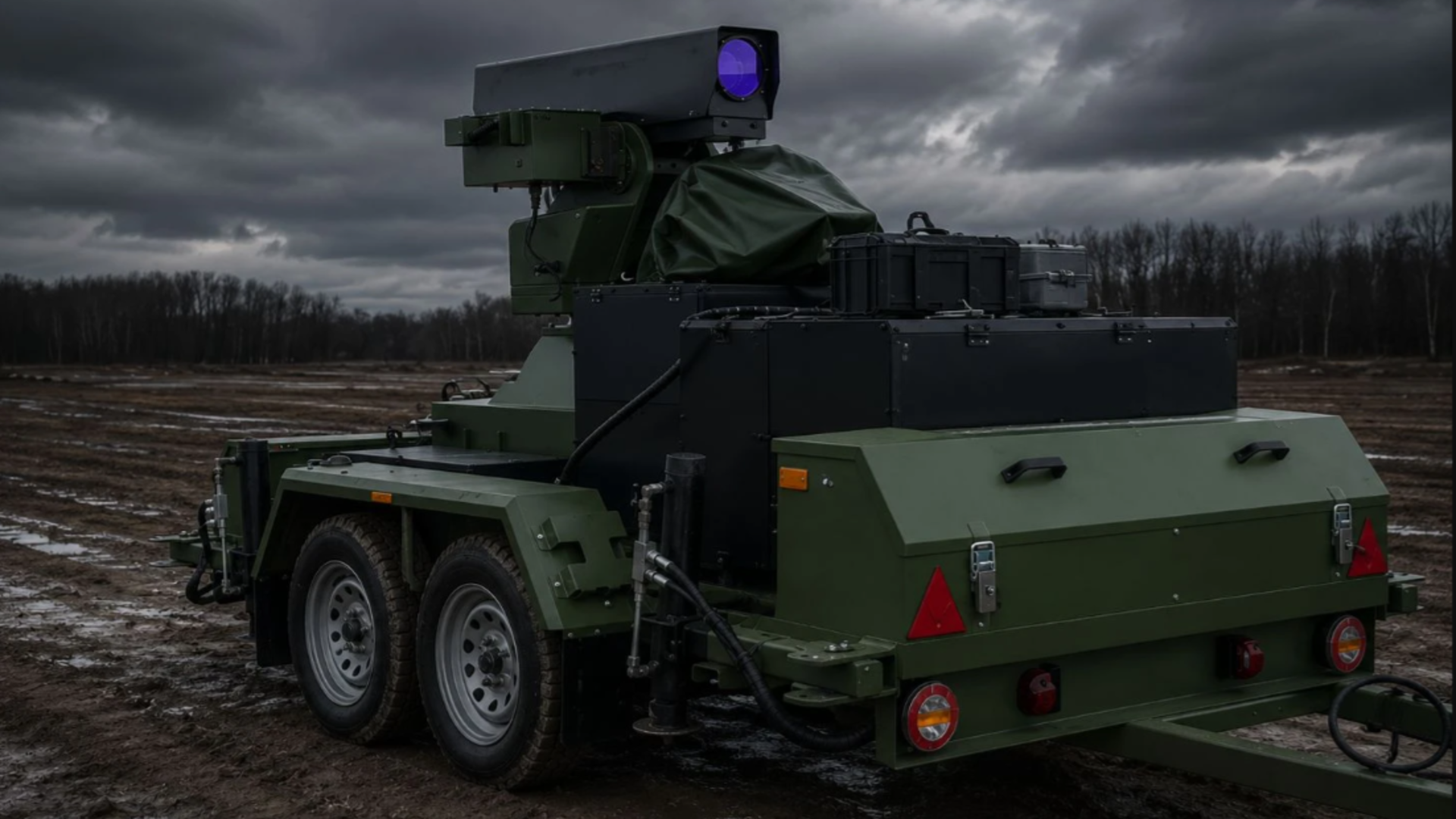
The long-held dream of practical laser weapons might finally be solidifying on the battlefields of Ukraine. Reports emerging this week suggest a new system, dubbed "Trident," is in the works, promising to incinerate enemy drones and disrupt surveillance for what's described as a tiny fraction of the cost of conventional air defense.
For years, laser weaponry felt like something out of science fiction – powerful, precise, but perpetually just out of reach for widespread battlefield deployment. Previous iterations were often bulky, power-hungry, and highly susceptible to weather conditions. But Ukraine's reported push into this technology, driven by its urgent need for affordable defenses against a constant aerial threat, indicates we might be seeing a shift. The Trident system is said to be capable of hitting targets up to three miles away, not just disabling drones but also reportedly blinding enemy surveillance systems, which would be a significant tactical advantage.
The Cost Factor: A Defense Industry Reckoning?
The most striking aspect of the Trident, if reports hold true, is its cost-effectiveness. In a conflict where Ukraine faces a relentless barrage of relatively inexpensive, off-the-shelf drones, traditional missile defenses quickly become economically unsustainable. Firing a multi-million dollar interceptor missile to take down a drone that costs a few thousand dollars is a losing proposition in a war of attrition. The source suggests the Trident system costs a mere fraction of what Western defense firms charge for their solutions, specifically mentioning Britain's DragonFire laser defense system.
This isn't just about Ukraine saving money; it's about a potential paradigm shift for the global defense industry. If a nation can develop and deploy effective, low-cost laser defenses, it fundamentally changes the calculus for military budgets and procurement strategies worldwide. Suddenly, the demand for expensive kinetic interceptors might drop, forcing established defense contractors to rethink their product lines and pricing models. We could see a fierce new competition to deliver affordable energy weapons, pushing innovation in power generation, beam stability, and targeting systems.
Beyond the Battlefield: Broader Implications
While details on the Trident remain somewhat scarce—the system is still reportedly in preparation—its potential implications extend far beyond the current conflict. A widely available, inexpensive air defense laser could democratize access to sophisticated protection, potentially altering geopolitical power dynamics. Smaller nations might gain a more credible defense against aerial threats, while larger powers would need to reassess their offensive drone strategies.
Of course, questions remain. The practicalities of deploying such a system in varying weather conditions, its power requirements in the field, and its true operational costs will be critical. But even the prospect of a low-cost, effective laser weapon emerging from the crucible of modern warfare is a significant development. It suggests that the drive for necessity, combined with rapid technological advancements, can push capabilities forward in ways traditional, slower-moving defense establishments often struggle to match.
Why it matters
The reported emergence of Ukraine's Trident laser is more than just another weapon system; it's a potent symbol of innovation under duress. If proven effective and affordable, it could fundamentally reshape how nations approach air defense, making missile-based solutions economically obsolete against cheap drones. This development might not only influence the trajectory of the ongoing conflict but also force a profound re-evaluation within the global military-industrial complex, signaling a new era for energy weapons and defense spending.
- laser weapon
- ukraine
- drone defense
- military tech
- defense economics
Sources
- New Ukrainian laser weapon reportedly blinds surveillance systems · Efosa Udinmwen
Related
Two Critical Kernel Bugs Threaten Linux Systems
Two new "very critical" vulnerabilities, CVE-2026-64564 and CVE-2026-64561, have been reported in the Linux kernel, affecting multiple versions up to 7.2-rc4. These bugs, one in SCTP and another in KVM, present significant risks to systems running the widely used operating system.
Aug 4, 2026
Bouncy Castle Bug Poses DoS Risk for Java Systems
A recently disclosed vulnerability, CVE-2026-58059, affects the widely used Bouncy Castle cryptographic library for Java. The bug, involving quadratic-time processing of X.500 distinguished names, could lead to denial-of-service attacks. Developers are urged to update to patched versions immediately.
Aug 3, 2026
Netty DNS Poisoning: A Recurring Threat to Network Apps
A new vulnerability, CVE-2026-45674, has surfaced in Netty, a widely used network application framework. The flaw allows for DNS cache poisoning due to improper validation of CNAME records, potentially redirecting users to malicious sites. Developers should update to versions 4.1.135.Final or 4.2.15.Final immediately.
Jun 12, 2026