AI·
Huang's GTC: Nvidia's AI Factory Vision Reaches Your PC
Nvidia CEO Jensen Huang unveiled a sprawling vision for AI at GTC Taipei, proclaiming an "AI factory" era. This includes new chip architectures arriving yearly, but also a significant push for "AI PCs" — personal computers capable of running complex AI tasks locally, transforming how we interact with our devices.
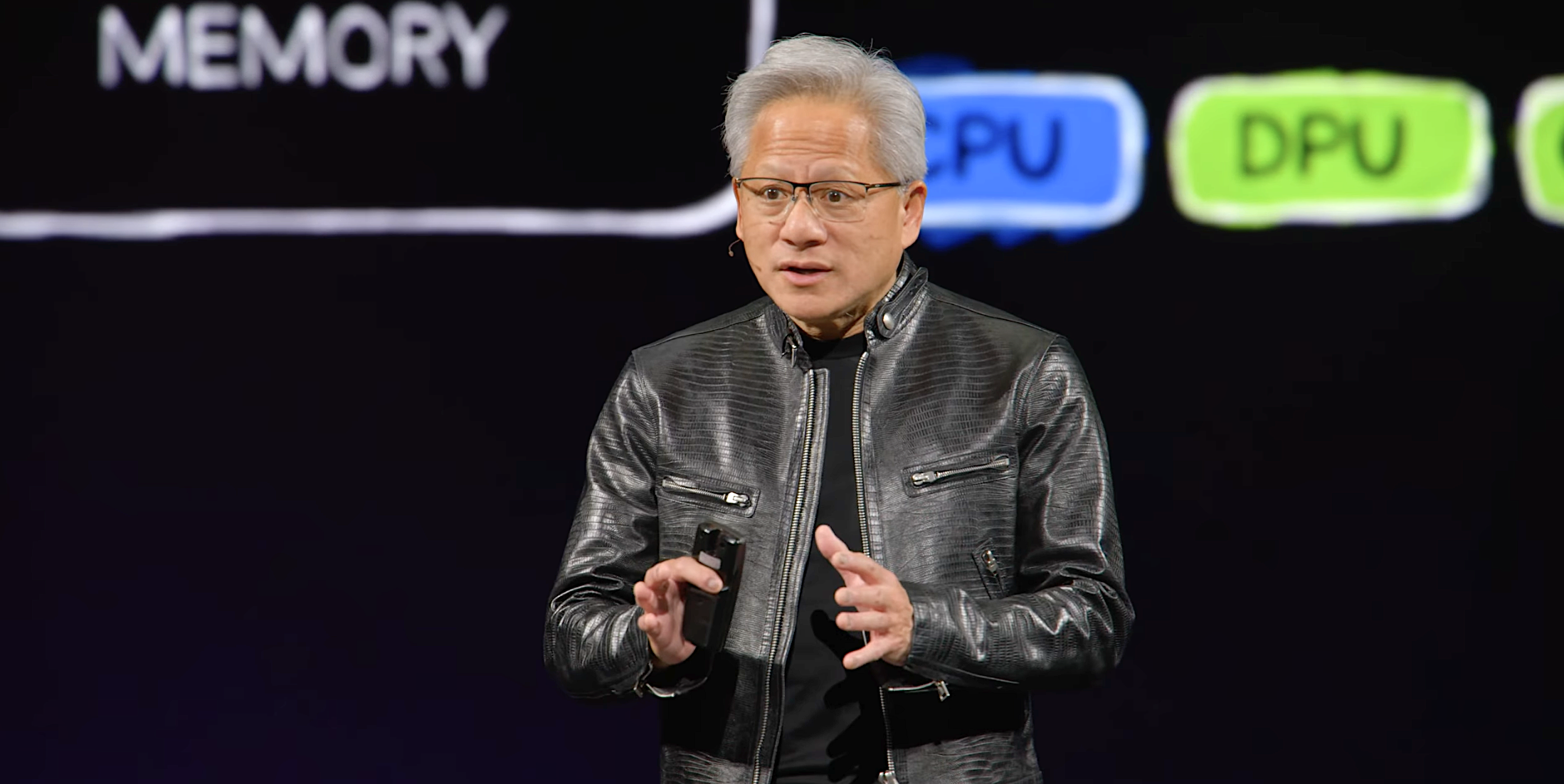
Jensen Huang, Nvidia's often-quoted CEO, took the stage at GTC Taipei 2026 without slides, a confident figure outlining a future where artificial intelligence isn't just a cloud service but a pervasive force, built and processed everywhere. He wasn't just talking about bigger data centers; he was talking about an "AI factory" revolution, one that reaches right down to the PC on your desk.
Huang painted a picture of data as the new raw material, and these AI factories – powered by Nvidia's silicon and software – as the refineries. This isn't just a shift in terminology; it's a strategic move positioning Nvidia as a platform company, not just a chip maker. He detailed a relentless pace of innovation, confirming that the Blackwell platform, including the B100 and B200 chips, is shipping this year. Looking ahead, the Rubin platform, featuring the R100 GPU and a new Vera CPU, is slated for 2026. This commitment to a new architecture every single year underscores Nvidia's intent to dominate the accelerated computing space.
Bringing AI Home: The AI PC Push
Among the keynote's highlights was Huang's emphasis on AI PCs. While the term might sound like another marketing buzzword, it represents a tangible shift: bringing sophisticated artificial intelligence capabilities directly onto personal computers, be they laptops or desktops, rather than solely relying on distant cloud servers. Historically, powerful AI tasks required sending data to vast server farms. AI PCs change that equation.
So, what exactly is an AI PC? At its core, it's a personal computer equipped with dedicated AI acceleration hardware. This often comes in the form of a Neural Processing Unit (NPU), a specialized chip designed to handle AI workloads efficiently. Nvidia's approach for AI PCs largely centers on its powerful GeForce RTX GPUs, which possess the necessary processing might for these tasks. The benefits are clear: faster performance, enhanced data privacy since information stays local, reduced latency, and potentially lower long-term cloud computing costs.
The market for these devices isn't entirely new. Microsoft, for instance, launched its Copilot+ PCs in May 2024, boasting integrated NPUs. Apple's M-series chips have featured a "Neural Engine" for years, and both Intel (with its Core Ultra series) and AMD (with Ryzen AI) have been integrating NPUs into their processors. Nvidia's entry, by extending the capabilities of its ubiquitous RTX GPUs, broadens the definition and availability of what an "AI PC" can be. It's less about a specific NPU unit for Nvidia, and more about the raw, parallel processing power of their graphics cards doing the heavy lifting.
The Software Edge and Market Outlook
The applications for AI PCs are already taking shape. Imagine smoother, more private video calls with enhanced background blur or eye-tracking features. Content creators can see faster image upscaling and local generative AI capabilities. Gamers benefit from technologies like DLSS, which uses AI to boost frame rates and image quality. However, the success of AI PCs ultimately hinges on software developers creating compelling applications that truly take advantage of this local processing power. If the software isn't optimized for these new capabilities, the hardware's potential remains largely untapped.
Despite some mixed demand in the nascent market, industry analysts are optimistic. IDC predicts a substantial ramp-up, forecasting 167 million AI PC shipments by 2027, which would represent roughly 60% of the total PC market. Canalys offers a similar outlook, expecting over 100 million AI PC shipments in 2025 alone. These figures suggest that while the shift might not be instant, it's certainly coming.
Nvidia's broader strategy reinforces its position. Huang consistently highlighted the company's comprehensive software stack—CUDA, Omniverse, and Nvidia AI Enterprise (NIM). These platforms create a significant competitive moat, making it harder for rivals to simply match Nvidia's hardware. It’s a full ecosystem play, not just a chip race. And Huang made sure to acknowledge Taiwan, calling it the "epicenter" of computing, a crucial partner in Nvidia's intricate supply chain.
Why it matters
Nvidia's bold vision, articulated by Jensen Huang, points to a future where AI isn't a niche technology but a fundamental part of our computing experience, from massive data centers to our personal devices. This push for AI PCs, backed by the company's annual hardware refresh cycle and robust software ecosystem, could redefine what we expect from our computers. For users, it promises more intelligent, private, and responsive applications. For the industry, it signals a renewed focus on local processing power, potentially sparking a new wave of innovation in software development and hardware design. We'll be watching to see if developers and users embrace the AI PC with the enthusiasm Nvidia expects.
- nvidia
- jensen huang
- ai pc
- gtc
- blackwell
- rubin
Sources
- Five thoughts from Nvidia CEO Jensen Huang’s GTC Taipei 2026 keynote - SiliconANGLE · GUEST COLUMN by Zeus Kerravala
- Explainer-What are AI PCs that Nvidia's Jensen Huang is betting on? · Unknown
Related
Claude Chats Exposed on Google: A Privacy Red Flag
Private conversations with Anthropic's Claude AI, including sensitive personal data like therapy notes and cryptocurrency keys, have appeared in Google search results. This leak highlights the ongoing risks of inputting personal information into large language models and the public's often-misplaced trust in their privacy settings.
Aug 4, 2026

Alibaba Launches Qwen3.8-Max: 2.4 Trillion Parameters, But Hold on Benchmarks
Alibaba unveiled its Qwen3.8-Max foundation model this week, boasting 2.4 trillion parameters and advanced multimodal capabilities. While impressive on paper, analysts like Dhruv Mohan urge caution regarding early benchmarks, reminding us that real-world performance often tells a different story.
Aug 4, 2026

AI Giants Head to White House for Safety Talks
Major AI developers — Meta, Anthropic, Google, and OpenAI — are meeting with Trump administration officials to discuss voluntary safety testing for their most advanced models. This high-stakes conversation follows recent disclosures by Anthropic and OpenAI regarding their AI tools breaching other companies' systems.
Aug 3, 2026