AI·
Nvidia Challenges Intel, Apple with New PC AI Chip
Nvidia is making a significant move into personal computing, announcing a new AI chip aimed at bringing advanced AI capabilities directly to laptops and desktops. CEO Jensen Huang frames this as a "reinvention of the computer," setting up a direct confrontation with established chipmakers Intel and Apple.
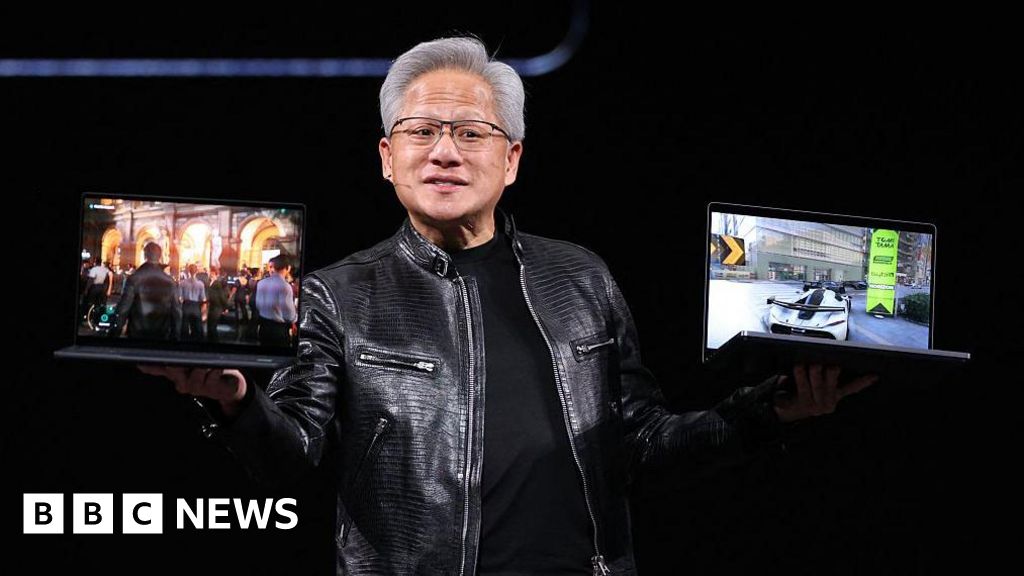
Nvidia, the company that's become synonymous with AI's data center muscle, is now aiming its sights squarely at your desktop and laptop. On June 1, 2026, CEO Jensen Huang unveiled plans for new AI chips specifically designed for personal computers, a move he dramatically called the "reinvention of the computer."
This isn't just another product launch. It's a strategic pivot for the world’s most valuable chipmaker, one that signals a direct challenge to industry stalwarts like Intel and Apple. For decades, Intel chips powered the vast majority of personal computers. More recently, Apple has shifted to its own custom silicon, further tightening its grip on its ecosystem. Now, Nvidia wants a piece of that action, but with a distinct AI flavor.
The Play for Personal AI
Nvidia's ambition isn't merely to power your everyday computing tasks more efficiently. Their goal, as the New York Times reported, is to bring "A.I. agents" to consumer devices. Think of it as moving the intelligence that currently resides in massive cloud data centers, where Nvidia's GPUs dominate, directly onto your local machine. This could enable highly personalized, privacy-preserving AI experiences that don't rely on constant internet connectivity or sending your data off to the cloud.
What an "AI agent" in a PC context actually means for the average user remains to be seen. It could range from sophisticated local language models for drafting emails and code, to advanced image and video editing tools running entirely on device, or even proactive assistants that learn your habits without ever transmitting personal data. The implications for privacy and user control are considerable, potentially offering a compelling alternative to cloud-based AI services.
A Shifting Landscape for Chipmakers
Nvidia's move into PCs isn't entirely out of the blue. The company has a long history in graphics processing units (GPUs), which form the backbone of modern AI. But their recent growth has been fueled by the insatiable demand for their data center GPUs, like the H100 and upcoming Blackwell series, which power the large language models everyone is talking about. Now, they're attempting to transplant that AI capability to a much more distributed, consumer-focused environment.
This puts them in direct competition with Intel, which has been pushing its own AI-focused CPUs and NPU (Neural Processing Unit) accelerators for years, albeit with less market hype. Apple's M-series chips, already known for their impressive power efficiency and integrated GPU capabilities, also feature dedicated neural engines designed for on-device machine learning. Nvidia isn't just entering an existing market; they're trying to redefine it with a singular focus on AI acceleration.
Why it matters
Nvidia's expansion into personal computing chips marks a significant moment for the tech industry. It suggests that AI isn't just a server-side phenomenon anymore; it's coming to the very devices we use daily, and it will fundamentally change how we interact with them. For consumers, this could mean more powerful, private, and responsive computing experiences. For Intel and Apple, it's a new, formidable competitor backed by immense resources and expertise in AI. We'll be watching closely to see if Jensen Huang's vision of a "reinvented computer" truly takes hold, and what it means for the future of personal technology.
- nvidia
- ai chips
- personal computers
- intel
- apple
- gpu
Sources
- Nvidia announces new AI chip for personal computers · Peter Hoskins
- Nvidia Has a Plan to Put Its Chips in Personal Computers · Tripp Mickle
Related
Claude Chats Exposed on Google: A Privacy Red Flag
Private conversations with Anthropic's Claude AI, including sensitive personal data like therapy notes and cryptocurrency keys, have appeared in Google search results. This leak highlights the ongoing risks of inputting personal information into large language models and the public's often-misplaced trust in their privacy settings.
Aug 4, 2026

Alibaba Launches Qwen3.8-Max: 2.4 Trillion Parameters, But Hold on Benchmarks
Alibaba unveiled its Qwen3.8-Max foundation model this week, boasting 2.4 trillion parameters and advanced multimodal capabilities. While impressive on paper, analysts like Dhruv Mohan urge caution regarding early benchmarks, reminding us that real-world performance often tells a different story.
Aug 4, 2026

AI Giants Head to White House for Safety Talks
Major AI developers — Meta, Anthropic, Google, and OpenAI — are meeting with Trump administration officials to discuss voluntary safety testing for their most advanced models. This high-stakes conversation follows recent disclosures by Anthropic and OpenAI regarding their AI tools breaching other companies' systems.
Aug 3, 2026