AI·
NVIDIA Commits $40B to AI Equity, $30B for OpenAI
NVIDIA has committed over $40 billion to artificial intelligence equity deals in early 2026, including a massive $30 billion investment in OpenAI. This move signals NVIDIA's deepening influence beyond just hardware, forging direct financial ties with key AI developers and reshaping the industry's landscape.
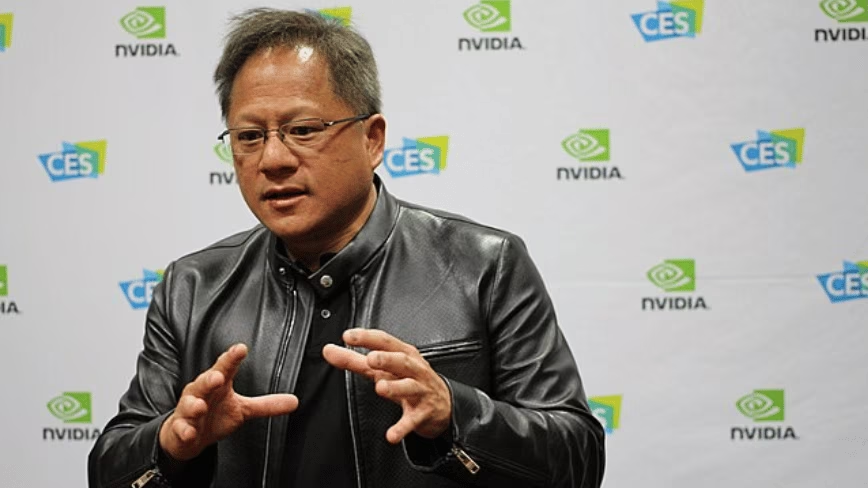
NVIDIA, the chip giant underpinning much of the world's artificial intelligence infrastructure, just made a move that could redefine its role in the AI ecosystem. Early in 2026, the company poured over $40 billion into various AI equity deals, with a stunning $30 billion of that directed squarely at OpenAI. This isn't just about supplying GPUs anymore; it's about owning a piece of the future applications those GPUs power.
The scale of this investment is truly eye-opening. For a company primarily known for its semiconductors, a $40 billion equity commitment in a few months suggests a profound shift in strategy. It places NVIDIA not just as a critical enabler, but as a direct stakeholder in the success of the AI companies building on its technology. The $30 billion stake in OpenAI, specifically, binds the two entities in a way that goes far beyond a customer-supplier relationship. It's a strategic move designed to secure NVIDIA's long-term dominance in the AI compute market and ensure a direct return on the AI boom it helped create.
NVIDIA's Shifting Strategy
NVIDIA's ascent has been meteoric, driven by the indispensable nature of its Graphics Processing Units (GPUs) for AI training and inference. For years, the company has benefited immensely from the AI gold rush, selling the 'picks and shovels' to every prospector. This equity play, however, suggests NVIDIA wants to own a piece of the gold mine itself. By investing directly in companies like OpenAI, NVIDIA secures future demand for its chips, gains insights into the evolving needs of leading AI labs, and potentially influences the direction of AI development to align with its hardware strengths.
This isn't an entirely new playbook in tech. Microsoft’s multi-billion dollar investment in OpenAI, which predates this NVIDIA deal, gave the software giant cloud credits and a strategic partnership, intertwining their futures. Similarly, Google has backed Anthropic, another major AI player. What sets NVIDIA's move apart is its sheer size and the fact that it comes from a hardware manufacturer. It suggests a growing recognition that hardware and software success in AI are becoming increasingly interdependent, making direct investment a powerful way to solidify market position.
The OpenAI Angle: A New Dynamic
The $30 billion from NVIDIA will undoubtedly provide OpenAI with an immense war chest for continued research and development. OpenAI has been at the forefront of generative AI, pushing boundaries with models like GPT. Such significant funding could accelerate their efforts, allowing them to attract top talent, expand compute resources, and tackle increasingly ambitious projects.
However, this new investment also introduces an interesting dynamic, particularly given OpenAI's existing close ties with Microsoft. While Microsoft’s stake is reportedly non-dilutive and focused on cloud compute, NVIDIA’s equity investment positions them as a significant financial backer with a direct stake in OpenAI’s valuation. This could lead to complex strategic considerations regarding chip supply, platform choices, and even competitive positioning against other NVIDIA-backed AI ventures. We'll be watching closely to see how this new, powerful relationship balances with existing partnerships and whether it pushes OpenAI towards deeper integration with NVIDIA's compute ecosystem.
What This Means for the AI Market
For the broader AI market, this investment from NVIDIA is a strong signal of confidence, but also a potential consolidator. It reinforces the idea that the top-tier AI companies will require staggering amounts of capital to compete, potentially making it harder for smaller players to gain traction without major backing. Valuations across the AI sector may see further inflation, especially for companies that can secure such strategic investments from industry giants.
NVIDIA's move could also intensify competition among chip makers. By directly aligning with OpenAI, NVIDIA creates a strong preference for its hardware within one of the most influential AI organizations. Competitors like AMD or Intel, already playing catch-up in the AI chip space, might find it even harder to penetrate these strategic accounts. This investment isn't just about today’s chips; it's about locking in the architects of tomorrow's AI, ensuring NVIDIA's hardware remains the foundational choice for the next generation of models and applications.
Why it matters: This isn't just a big check; it's a strategic declaration. NVIDIA isn't content to be merely the picks-and-shovels provider for the AI gold rush. By taking a substantial equity stake in OpenAI and other key players, they're ensuring their chips remain central, their influence grows, and they participate directly in the immense value creation happening at the application layer. We'll see if this move tightens the competitive landscape or fosters new collaborations, but one thing is clear: the lines between AI hardware and software just got a whole lot blurrier.
- nvidia
- openai
- ai investment
- gpus
- tech finance
- ai strategy
Sources
- NVIDIA tops $40bn in AI equity bets in 2026 · Alina Maria Stan
Related

Replit, Visa Empower AI Agents with Digital Identity and Payments
Replit and Visa are partnering to embed payment capabilities directly into AI agent workflows, allowing autonomous agents to pay for services. This collaboration includes a strategic investment from Visa and a new identity layer for agents, potentially reshaping how AI software operates and transacts online.
May 30, 2026
Nvidia Deepens Korea Ties with AI Hub Plan, Huang Visit
Nvidia is strengthening its footprint in South Korea. CEO Jensen Huang is expected to visit, coinciding with plans by Nvidia-backed Reflection AI to build a multi-billion dollar data center there. This move signals a strategic push for open AI infrastructure amid rising global competition.
May 30, 2026

OpenAI Taps Citi, JPMorgan for IPO Preparations
OpenAI is reportedly in talks with financial giants Citigroup and JPMorgan Chase to join its initial public offering banking lineup. This move, reported late last week, signals serious progress toward a highly anticipated public debut for the influential AI developer.
May 29, 2026